
Toyomotors Co. replaces brake pads for cars, trucks, and SUVs in Missouri City, Texas. Our ASE-certified technicians measure pad thickness, check rotor condition, and service caliper hardware so your vehicle stops straight, quietly, and predictably. Bring your vehicle to our FM 1092 shop for a brake inspection before a squeal becomes a grind.
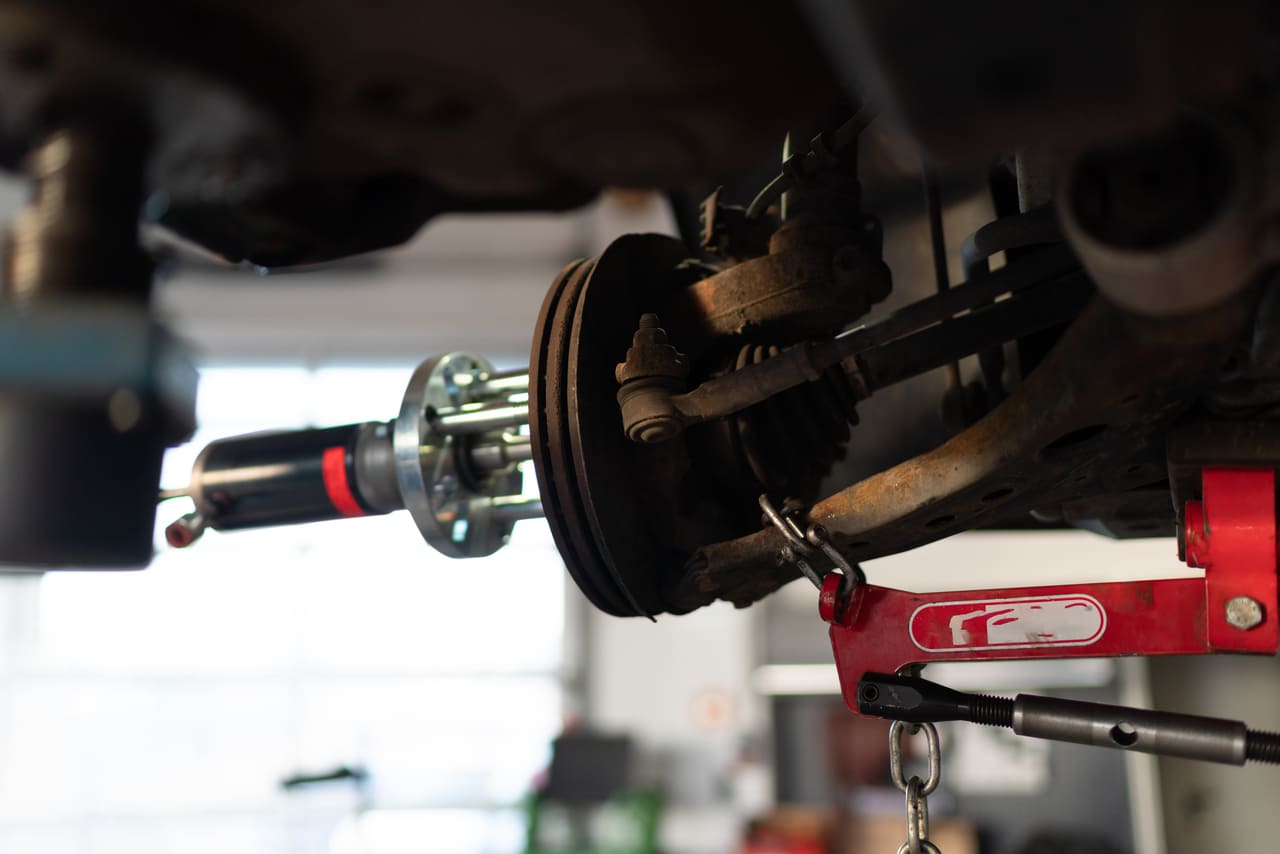
Brake pads are the friction component that slows your vehicle. Each pad presses against a spinning rotor, and that contact converts motion into heat. Every stop removes a thin layer of pad material, so all brake pads eventually wear out.
Missouri City driving wears pads faster than many drivers expect. Stop-and-go traffic on Highway 6, repeated lights along Texas Parkway and Cartwright Road, and quick deceleration at Fort Bend Parkway exits all put constant load on your front brakes. Summer heat in Fort Bend County raises brake operating temperatures, and high Gulf Coast humidity leaves a layer of surface rust on rotors overnight.
Toyomotors Co. replaces brake pads with these local conditions in mind. We match pad compounds to how and where you drive, whether that means daily school runs in Sienna, commuting into Houston on Beltway 8, or towing a boat toward the coast on weekends.
Worn brake pads give clear signals before they fail. Recognizing these signs early protects your rotors and lowers the cost of the repair.
Toyomotors Co. installs pads matched to your vehicle’s manufacturer specification, then resurfaces or replaces the rotor depending on thickness and wear pattern.
A seized or leaking caliper causes uneven pad wear and reduced stopping power. Toyomotors Co. tests caliper function under load before recommending repair or replacement.
Brake fluid absorbs moisture over time, which lowers its boiling point and softens pedal response. Toyomotors Co. flushes and replaces fluid on a schedule tied to your vehicle’s mileage and driving conditions, not a fixed calendar date.
A grinding or failing brake system is not a wait-a-week issue. Toyomotors Co. holds same-day inspection slots for drivers reporting active grinding, pulling, or brake warning lights.
Uneven pad wear or a sticking caliper causes the vehicle to pull when you brake. One side is gripping harder than the other.
Many newer vehicles use electronic pad wear sensors. The dashboard light turns on when a sensor detects that the pads have reached their service limit.
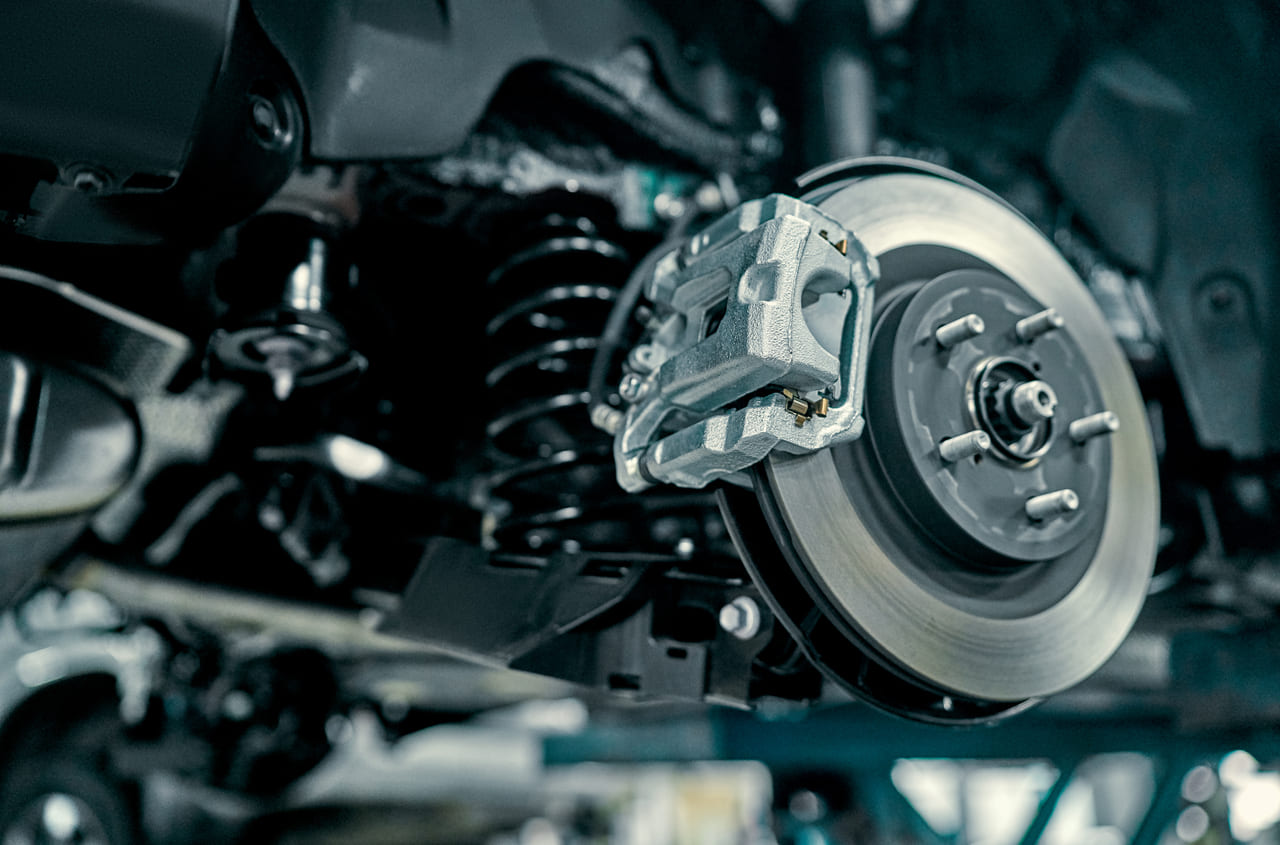
Brake pad compounds differ in noise, dust, heat tolerance, and lifespan. Our technicians recommend a pad type based on your vehicle, your driving habits, and the manufacturer’s specifications.
Ceramic Brake Pads
Ceramic pads run quietly and produce light-colored, low-visibility dust. They handle commuter driving well and suit most sedans, crossovers, and family SUVs in Missouri City.
Semi-Metallic Brake Pads
Semi-metallic pads contain steel fibers that resist heat fade. They perform well on trucks, larger SUVs, and vehicles that tow trailers or carry heavy loads.
Organic Brake Pads
Organic pads, also called non-asbestos organic pads, offer soft engagement and low noise. They wear faster and fit lighter vehicles with lower braking demands.
OE-Equivalent Pads
Some vehicles perform best with pads that match the original factory specification. We source OE-equivalent pads when your vehicle’s braking system calls for them.
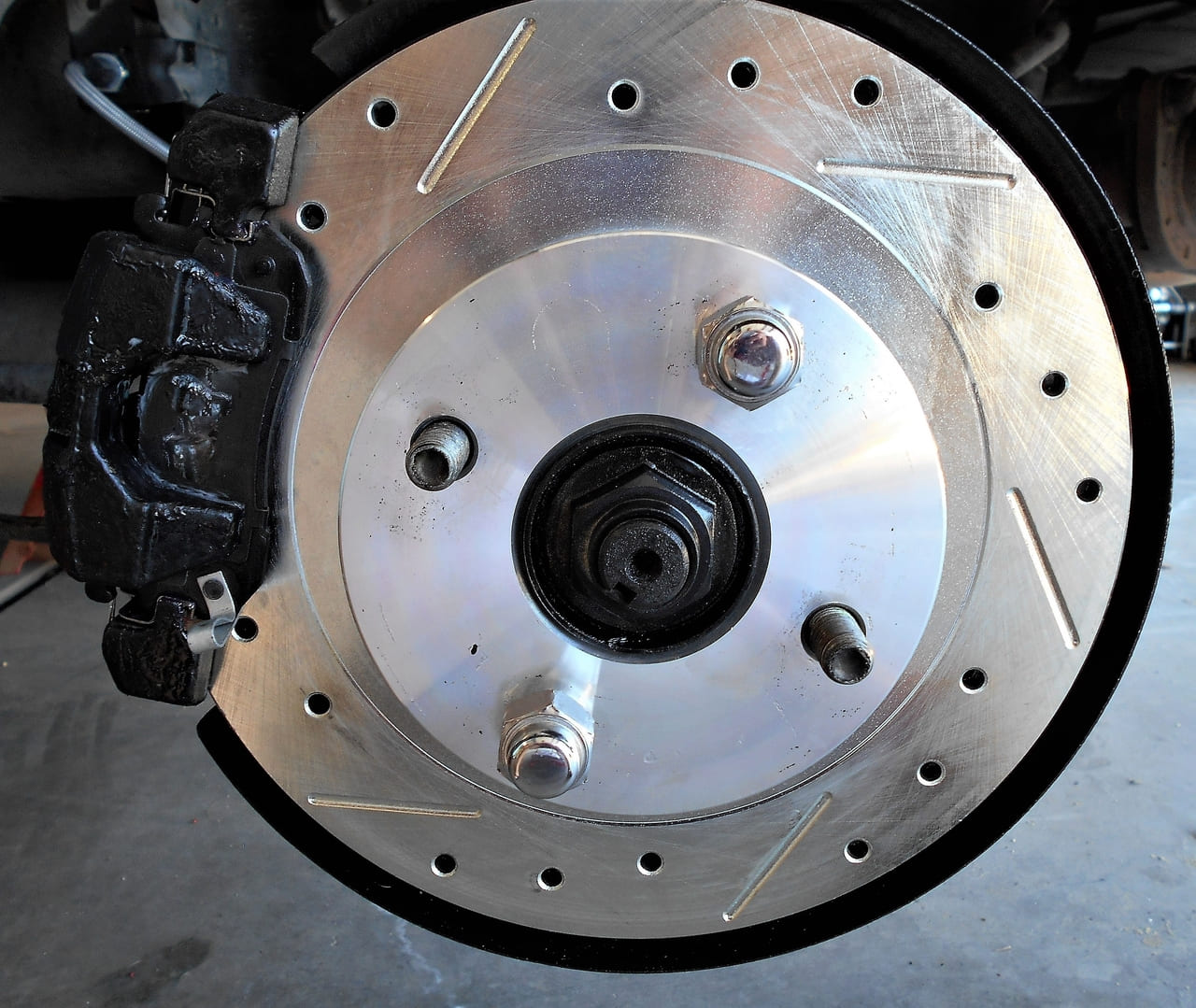
A brake pad replacement involves more than swapping friction material. Our technicians follow a defined sequence on every brake job.
Road Test and Brake Inspection
A technician drives your vehicle to confirm the symptoms you described. The inspection then covers pads, rotors, calipers, brake lines, and fluid.
Pad Thickness Measurement
We measure remaining pad material on each wheel. You receive the readings so you can see exactly how much life remains.
Rotor Evaluation
Each rotor is checked for minimum thickness, scoring, and heat spots. Rotors that fall below specification are replaced, and rotors within specification may be resurfaced.
Caliper and Hardware Service
Caliper slide pins are cleaned and lubricated with high-temperature brake grease. Worn clips and anti-rattle hardware are replaced to prevent noise and uneven wear.
Brake Fluid Check
Brake fluid absorbs moisture from the air over time. We test fluid condition, which matters in a humid climate like Fort Bend County, and recommend a flush when moisture content is high.
Pad Bedding and Final Road Test
New pads are bedded into the rotors through a controlled series of stops. Bedding transfers an even layer of pad material onto the rotor surface, which improves stopping performance and reduces noise.
Toyomotors Co. replaces brake pads for drivers in:
Our FM 1092 location sits within easy reach of Highway 6, Texas Parkway, Fort Bend Parkway, US 90A, and Beltway 8.
Most brake pads last between 30,000 and 70,000 miles. Heavy stop-and-go driving, towing, and high heat shorten that range. An inspection gives you an accurate answer for your vehicle.
A standard pad replacement on one axle usually takes about one to two hours. Rotor replacement, caliper repair, or a fluid flush adds time.
No. Rotors that meet minimum thickness and have a smooth surface can stay in service. Rotors that are too thin, warped, or deeply scored need replacement.
Front pads usually wear faster because they handle most of the braking force. We replace pads by axle and only recommend rear pads when measurements show they are worn.
Light noise during the first few days can come from the bedding process or surface rust caused by humidity. Persistent squealing points to a hardware or installation issue, and we will inspect it.
Squealing, grinding, or a soft brake pedal all mean your vehicle needs attention. Toyomotors Co. inspects your brakes, shows you the measurements, and replaces worn pads with parts suited to your vehicle and your daily drive. Call our FM 1092 shop or schedule your brake inspection online today.